

Industrial Revival: Atlas Repurposes a 1920s Abandoned Factory into a Creative Hub
“Deciding to restore the original windows was more-or-less a decision to compromise on energy-efficiency,” says Joseph. “We offset that by buying into a solar CSA, and currently all of the energy consumed by the building is solar generated.”As more and more city mice head for the hills, a rustic Brooklyn has emerged in the scenic Hudson River towns north of NYC. But industrial Newburgh, across the Hudson from happening Beacon, has until recently never been part of that scene. A once-booming industrial center known for its textile factories, the city was in a deep state of abandonment and decline when Joseph Fratesi and Thomas Fratesi staked a giant claim there. The two are the founding partners of Atlas Industries, a craft-based architecture, design, and manufacturing firm that they founded back in 1993 in the gritty wastelands of Gowanus, Brooklyn. There, they converted a commercial building into an enclave of workshops for artists and makers—and two decades later, decided to do it again, this time on a grander scale in Newburgh.
In 2012, they took over a 55-square-foot dinosaur, an abandoned three-story brick factory built to manufacture worsted yarn. Its hundreds of steel-framed windows had been filled in with cinderblocks—unveiling them has been but one of the ongoing tasks the firm took on to create Atlas Studios, now home to 45 creative businesses, including Atlas Industries itself. In addition to artful urban renewal, Atlas is known for its go-anywhere modular steel shelving. Join us for a look at their now complete and humming Newburgh quarters.
Photography by Dana Gallagher, courtesy of Atlas Industries.
 Above: Atlas’s occupies a 15,000-square-foot corner of the vast complex, which is now a creative hub with its own gallery that hosts art shows, concerts, and events. The cinderblock-framed plantings are by Joseph’s wife, garden designer and Gardenista contributor Lindsey Taylor. Read her Gardenista stories here.
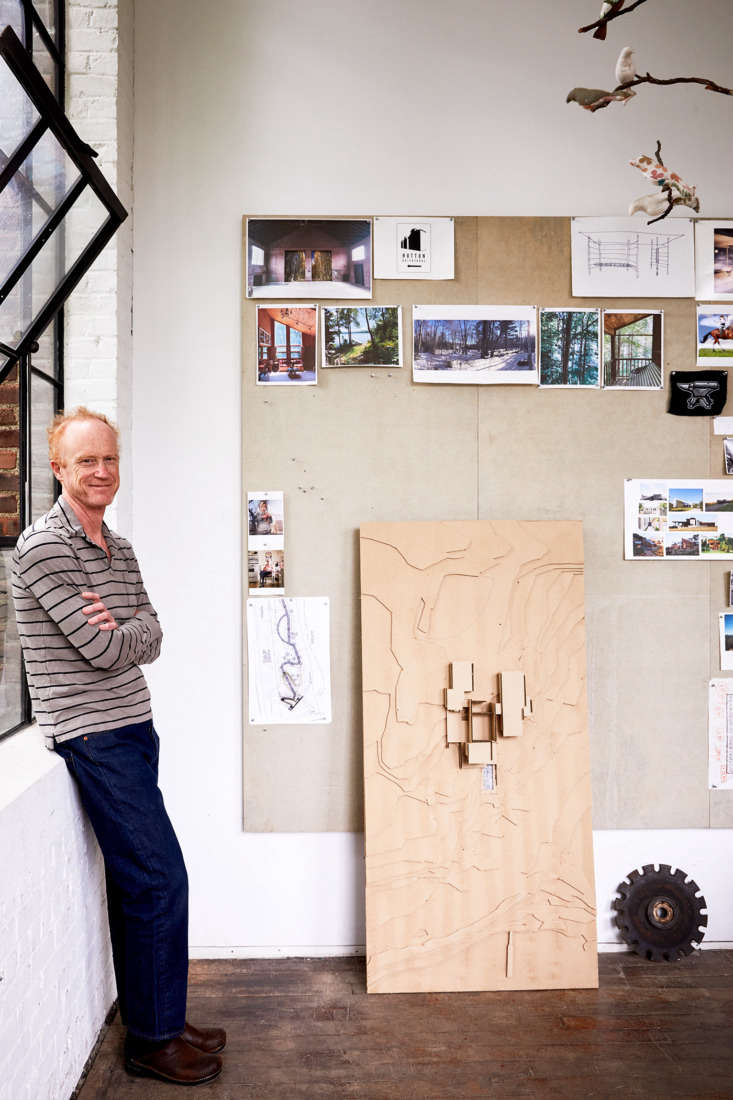
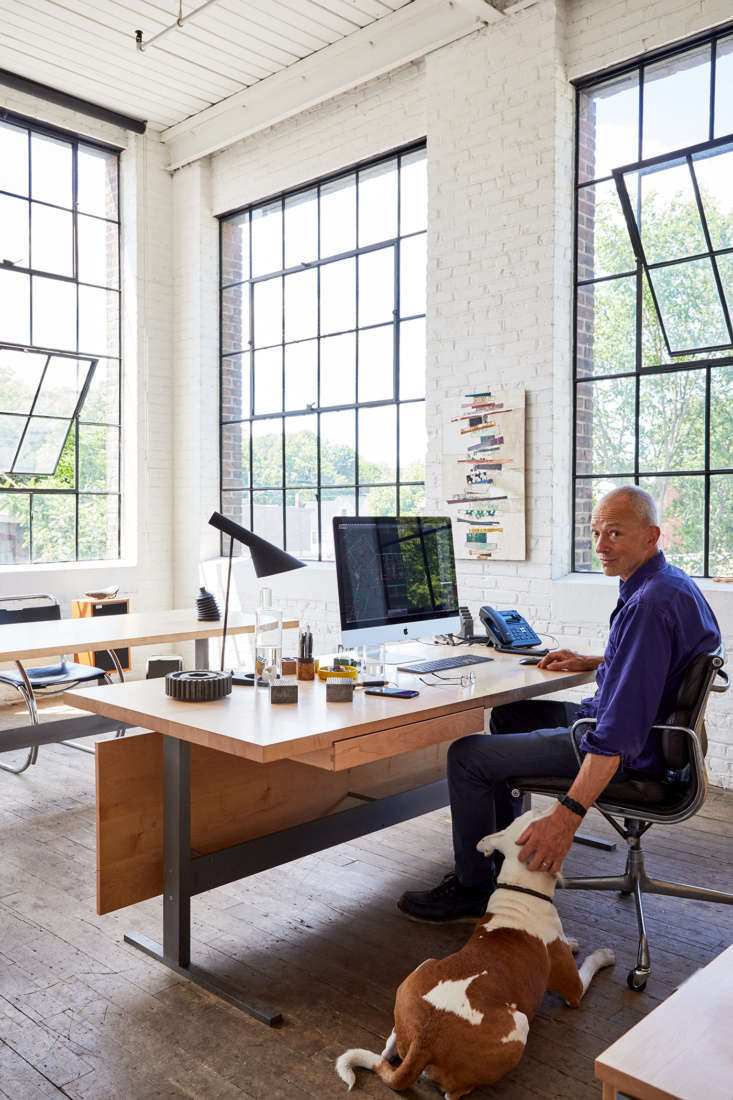
Above: Atlas partners, Thomas Wright (L) and Joseph Fratesi (R) spent eight years fixing up the factory. They carved out their own offices and metal shop first, and have since welcomed in dozens of other creative businesses and artists.
Explains Thomas, who was the first to decamp from Brooklyn: “Newburgh went the way of many northern industrial cities, losing jobs to cheaper labor first in other States, then overseas. It lost its tax base and was ravaged by failed urban renewal initiatives, corruption, crime, and poverty. But through it all, there remained a palpable spirit and love for the city. It has serially been on the verge of bootstrapping itself. Atlas and a brewery were the first businesses to settle in the city in decades. We’ve brought jobs to the community, and helped seed the idea that Newburgh is a place where exciting things are happening.”
Above: Atlas’s signature AS4 System shelving in maple and cold-rolled steel lines the wall behind Joseph’s desk, which is an Atlas prototype. The handmade AS4 system is modular and designed to be custom-tailored for any setting; it also can be disassembled, so it can move with you to your next home.
Above: Joseph’s dog, Mister Jones, lounges on a sheep-skin covered design classic, the PK22 by Poul Kjærholm. The restored and renovated Atlas Studios workspaces are now solar powered. They come with 14-foot ceilings and original brick walls and maple floors. “The patina and scars on the floors from so many years of use are beautiful,” says Joseph. “To me they look like notations.”
Above: An Atlas desk integrated into the AS4 Shelving on another wall in Joseph’s office. The sliding steel library ladder is one of the system’s many available custom add-ons, which, over the years, have included murphy beds, diaper-changing stations, wet bars, and bike racks.
Above: Thomas’s office is furnished with a prototype of a forthcoming Atlas modular system, the AS7, which is more sculptural than the rectilinear AS4 design.
Above: The AS7, here in walnut and bronze, has components that clamp on from the outside, and each bay is freestanding (the AS4 components screw into the standards and adjacent bays share a standard).
Above: Atlas’s studio manager and COO, Hannah Anderson, has the AS4 system with open and closed storage in her office.
Above: “Our metal shop is where we do ‘dirty’ operations like cutting and grinding metal, and where we store metal stock,” says Joseph.
The windows, he adds, were “little more than rusted steel and broken glass by the time we arrived on the scene. We hired a few local guys and trained them to do the restoration, which was completed over about four years. They worked on the windows when the weather was nice, and in the winter, focused on restoring and building out the interior.”
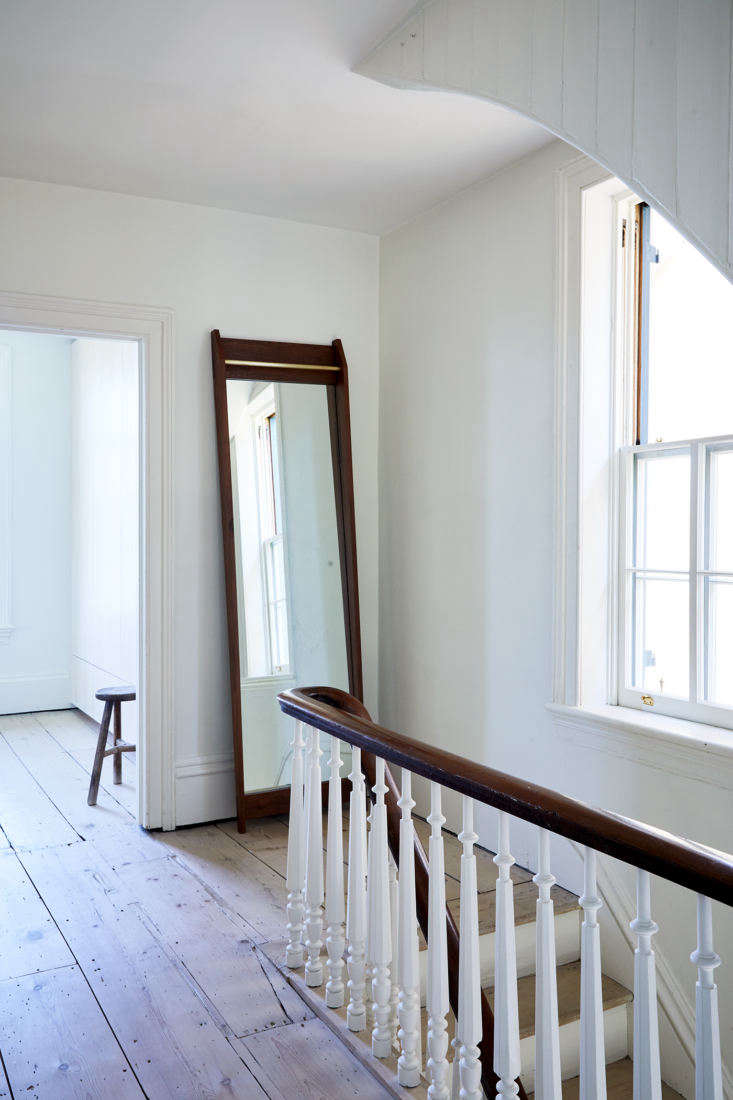

Above: In addition to designing historic reuse projects and interiors, Atlas Industries has its own line of furniture and objects, including the AM1 Mirror (L) and modernist Fire Tools (R). They’re shown here in their friend Nadia Tarr’s late-19th-century Newburgh house, the future home of her design gallery/retreat @saltsend “by appointment or sleepover.”
Above: Atlas’s round and triangular AT14 Coffee Tables and Folding Screen—all of their designs are available in a range of materials and finishes.
Above: Another view of the finished factory. “Deciding to restore the original windows was more-or-less a decision to compromise on energy-efficiency,” says Joseph. “We offset that by buying into a solar CSA, and currently all of the energy consumed by the building is solar generated.”
Before
Above: The factory as found in 2012. Built to make worsted yarn, it was successively used over the years to manufacture clothing and handbags, to warehouse and distribute carpeting, and to most recently to manufacture mattresses.
Above: A view of the cinderblock-lined walls.
Above: Thomas at work during Atlas’s first year in Newburgh.
We ran our first story on Atlas’s shelving back in 2007.
Peruse our feature on own own Julie and Josh’s Brooklyn Heights apartment, and you’ll see more Atlas shelving.